
You open a contractor’s quote. The final price tag shocks you immediately. Simple stone and dirt carry a forty percent markup. Contractors pad raw material invoices heavily. You can source bulk yard materials yourself quite easily.
Think of your yard bed like an empty cake pan. An empty rectangular pan requires an exact batter volume. Guessing the pan depth creates a massive mess. In my excavation experience, depth errors destroy budgets. Underestimating fill leaves your patio thin and useless. Overestimating wastes hundreds of dollars on extra stone. Accurate volume calculations eliminate contractor fees entirely. We will calculate your exact yard footprint today.
The Material Footprint Constant
To get started, calculate your raw ground surface area. Flat yard spaces define your total material footprint. Measure the outer perimeter length and width in feet. Multiply length by width to find total square footage. A twenty-foot by ten-foot area equals two hundred square feet. Square footage provides only two dimensions of your space. You must add a third dimension for depth. In our yard material testing, depth errors cause shortages.
Convert depth inches into decimal feet before calculating volume. Two inches equals zero point one seven feet. Three inches equals zero point two five feet. Four inches equals zero point three three feet. Six inches equals zero point five zero feet. Start with total area using the Square Footage Calculator if your bed is not a simple rectangle.
Calculate cubic volume using this fundamental earthworks formula:
Cubic Feet = Length in Feet × Width in Feet × Depth in Feet
Divide cubic feet by twenty-seven to find cubic yards:
Cubic Yards = Cubic Feet ÷ 27
You can verify your raw stone requirements instantly with our Gravel Calculator. Be sure to simulate your layout volume using our interactive Mulch Calculator for organic beds.
Surface Boundary Metrics and Geometry
Irregular yard curves require structured geometric breakdown. Divide complex curved beds into smaller rectangular sub-blocks. Add sub-block square footages together for total area. Circular patio zones use radius squared multiplied by pi. Accurate perimeter bounds prevent border material spillover. In my excavation experience, boundary margins protect your wallet. Edge lines frame aggregate stone and keep layers stable. Measuring sub-shapes ensures total area precision across sloped lawns.
| Surface Area (Sq Ft) | 2-Inch Depth (Cu Yds) | 3-Inch Depth (Cu Yds) | 4-Inch Depth (Cu Yds) |
|---|---|---|---|
| 100 Sq Ft | 0.62 Cu Yds | 0.93 Cu Yds | 1.23 Cu Yds |
| 200 Sq Ft | 1.23 Cu Yds | 1.85 Cu Yds | 2.47 Cu Yds |
| 500 Sq Ft | 3.09 Cu Yds | 4.63 Cu Yds | 6.17 Cu Yds |
Area First: Lock in square footage with the Square Footage Calculator, then run depth and cubic yards in the Gravel Calculator or Mulch Calculator.
The Subgrade Compression Variable
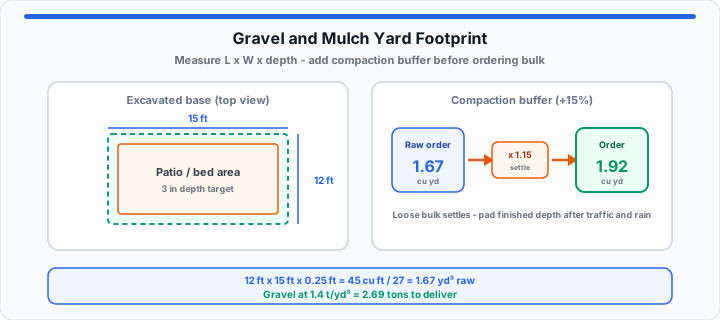
Moving onto depth factors, soil compaction alters total volume. Loose stone and organic mulch settle after placement. Heavy walking traffic compresses freshly dumped materials down. Rainfall packs loose wood fibers tight against raw soil. When I evaluate subgrade soil layers, settlement is constant. Uncompacted gravel sinks ten to fifteen percent into dirt. Organic shredded mulch decomposes and compacts over months. Ordering exact raw cubic volume leaves your bed shallow. Add a compression safety factor to raw order calculations. Multiply raw cubic volume by one point one five. This buffer ensures your finished layer meets target depth.
Compacted Volume = Raw Cubic Yards × 1.15
You can map out your raw bedding requirements using our free Mulch Calculator today. For poured slabs nearby, cross-check volume math with the backyard patio yardage guide, Concrete Pour Blueprint guide, and Concrete Calculator.
Settlement Compaction Variables and Subgrade Soil Sinkage
Subgrade soil softness dictates initial gravel sinkage rates. Clay subgrades hold firm under heavy stone base layers. Sandy subgrades allow loose aggregate to push downward easily. Geotextile fabric barriers stop stone loss into soft subsoils. Fabric prevents mud mixing while stabilizing your rock layer. In our yard material testing, fabric reduces aggregate loss. Compacting raw dirt subgrade prior to rock dumping prevents sinkage. Vibratory plate compactors lock crushed stone bases firmly together.
Organic Material Breakdown and Mulch Shrinkage
Bark mulch loses volume through natural biological decomposition. Soil microbes break down organic wood fibers in warm weather. A four-inch mulch bed shrinks significantly within twelve months. Aged mulch turns into rich organic soil over time. Plan annual top-dressing orders at fifty percent original volume. In my excavation experience, fresh mulch requires tight spreading.
The Bulk Delivery Manifest
In practical environments, yards buy stone by total weight. Quarries sell crushed aggregate in tons rather than yards. One cubic yard of gravel weighs approximately 1.4 tons. Dense stone aggregates weigh significantly more than wood mulch. Mulch stays light and sells strictly by cubic yard. Let us calculate a real garden walkway excavation project.
Crushed River Rock Walkway Calculation
- Target Area Dimensions: 12 feet long by 15 feet wide.
- Total Surface Area: 180 square feet of excavated base.
- Target Depth Specification: 3 inches of crushed river rock.
- Converted Depth Variable: 0.25 decimal feet depth.
- Calculated Raw Volume: 45 cubic feet of aggregate.
- Volume Conversion Metric: 1.67 raw cubic yards required.
- Compaction Buffer Factor: 15 percent extra aggregate material.
- Adjusted Total Volume: 1.92 padded cubic yards needed.
- Weight Conversion Factor: 1.4 tons per cubic yard.
- Final Delivery Order: 2.69 tons of river rock.
Border Constraint Metrics and Spillage Protection
Edging borders keep bulk aggregate inside designated pathways cleanly. Metal and plastic borders prevent gravel from spreading onto lawns. Thick stone edging adds decorative structural perimeter containment. Calculate border lineals to match total outer perimeter feet. A twelve by fifteen foot space requires fifty-four lineal feet. Proper edging holds loose stone layers tight under heavy foot traffic.
Open Gravel Calculator Open Mulch Calculator
Frequently Asked Questions
How many tons of gravel fit in a standard pickup truck bed?
A standard half-ton pickup holds one cubic yard of stone. One cubic yard equals roughly one point four tons of rock. Overloading pickup trucks damages rear suspension systems quickly. Always check your vehicle payload weight capacity before hauling stone.
Why do you divide cubic feet by 27 to get cubic yards?
One cubic yard measures three feet on all three sides. Multiply three feet length by three feet width by three feet depth. Three times three times three equals twenty-seven cubic feet. Dividing cubic feet by twenty-seven converts volume to cubic yards.
How deep should a backyard gravel patio be?
A durable gravel patio requires four inches of compacted stone. Pathway zones perform well with a three-inch crushed rock layer. Heavy vehicle driveways require six to eight inches of base rock. Proper excavation depth prevents gravel shifting under heavy foot traffic.
How much does bulk delivery save over bagged materials?
Bulk delivery saves fifty percent over store-bought bagged rock. Bagged stone carries huge retail packaging markup costs. Quarry delivery charges a single flat fee for bulk dumping. Ordering bulk material saves both time and significant money.