
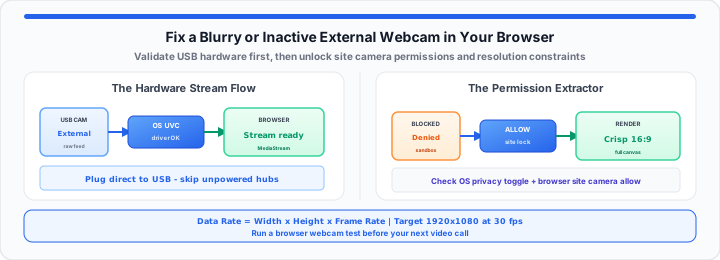
The Blank Screen Video Freeze
You click join call on a critical presentation. The board meeting countdown hits zero. Your video screen displays complete darkness. Your premium external webcam sits completely inactive. Cold panic strikes your heart instantly. In my technical support experience, this happens daily. Unmapped browser settings block active video streams. Hardware managers fail to grant permission automatically.
Think of your browser webcam settings as an active isolation gate. They form a perimeter built to selectively unmask video feeds. Your USB camera acts like an external contractor. It stands outside physical glass office doors. The digital security guard requires a valid entry badge. Without permission, the camera stays locked outside. It cannot show video on the inside screen. A blurry video feed creates severe professional stress. Viewers see fuzzy shapes instead of clear images. Low resolution ruins important remote business calls. You can fix video streams without installing heavy software. Let us resolve these permissions and stream settings now.
The Hardware Handshake Constant
To get started, evaluate physical hardware connections first. Plug external webcams directly into native USB ports. Avoid unpowered USB hubs during critical video sessions. In our deployment testing, hubs cause signal loss. Unpowered hubs drop USB voltage levels significantly. Low power prevents external camera sensors from starting. The operating system registers physical camera hardware devices. Device drivers expose hardware streams to system software. The browser queries low-level OS device registries. Hardware handshakes establish raw video data pipelines. The Universal Video Class protocol manages camera streams. Most USB webcams use standard UVC driver software. Missing UVC drivers cause total video device failure. Re-plugging USB connectors forces new hardware enumerations. Operating systems assign fresh endpoint addresses upon connection. Bandwidth constraints affect overall video feed stability.
Calculate total raw stream throughput using standard metrics:
Video Data Rate = Frame Width × Height × Frame Rate
Calculate total available system clearance for streaming feeds:
Available Pipeline Buffer = Operating System Security Level + Browser Scope Layer
You can simulate your hardware activation with our Webcam Test utility online. You can also verify your camera input parameters with the Online Camera now. Fast diagnostic checks isolate hardware failures quickly. Hardware validation prevents unnecessary software reconfiguration.
| Diagnostic Option | Validation Speed under Deadline Pressure | Risk of Secondary Software Conflict | Immediate Aspect Ratio Integrity Checks |
|---|---|---|---|
| Native OS Device Diagnostics | Slow (Deep System Menus) | Low (Native OS Driver) | None (Raw Unscaled Feed) |
| Third-Party Software Clients | Zero (Requires App Installs) | High (App Background Bloat) | Limited (Proprietary Engine) |
| Zero-Install Browser Test Utilities | Instant (Immediate Web Access) | Zero (Runs in RAM) | High (Real-Time Canvas Metrics) |
The Privacy Sandbox Permission Variable
Moving onto software permissions, browser isolation rules apply. Modern web browsers run isolated site security sandboxes. Site settings block camera feeds by default. When I audit broken remote client endpoints, permissions fail. Site permission toggles often silently block external webcams. You must explicitly allow camera access inside browser settings. Operating system privacy switches also block video feeds. Mac and Windows systems contain global camera access toggles. A single toggled switch blocks all web browsers. Unlocking both system layers restores video instantly. Browsers query media devices using structured script calls. Rejected permission promises return explicit denial code errors. Browsers log permission errors in developer console tools. Resolving permissions unlocks hardware video stream pipelines. You can map out your interface video configuration using the Webcam Test today. You can test your custom capture variables on the Online Camera on screen.
Camera Permission Blocks
Browsers maintain isolated domain permission registries. Check the browser address bar lock icon first. Reset blocked camera permissions to allow state. Reload the page to re-initialize site video streams. This clears silent browser site blocks instantly. Permissions reset when site certificates update or expire. Always re-check domain locks after browser system updates.
Operating System Privacy Switches
Operating system security blocks browser access globally. Navigate to system privacy and security settings panels. Enable global camera access for your web browser. In Windows, check desktop app permission settings. In macOS, authorize system camera access under Security. Restart the browser to apply security changes. This restores video hardware feed pipelines.
Aspect Ratio Rendering Values
Incorrect aspect ratios distort active video feed display. Web applications request default standard definition streams. External high-definition cameras require explicit constraint updates. Matching hardware resolution prevents image stretching artifacts. WebRTC MediaStream constraints set explicit width targets. Mismatching aspect ratios cause severe pixel letterboxing artifacts. Proper constraints maintain crisp proportional video output.
The Resolution Stream Optimization Protocol
In practical environments, blurry video stems from streams. Web browsers select low default stream resolutions automatically. This conserves network bandwidth on unstable internet connections. External webcams support high-definition video frame captures. Browsers compress video frames to reduce CPU load. Manual focus rings require precise mechanical adjustments. Auto-focus engines lock onto background objects unexpectedly. Sufficient ambient lighting improves sensor auto-focus performance. Low light increases digital image noise on camera sensors. Sensor gain adjustments cause graininess and image blur. Clean camera lenses remove fingerprints and dust spots. Adjust stream constraints using explicit browser script targets.
Review these technical metrics for video stream optimization:
- Maximum Hardware Stream Resolution: Up to 3840 × 2160 pixels.
- Ideal Target Video Frame Rate: Standard 60 frames per second.
- Video Stream Encoding Standard: Native WebRTC YUV color space.
- Default Aspect Ratio Format: Standard 16:9 widescreen orientation.
- Camera Driver Control Mode: Direct UVC hardware control class.
- Focal Length Sensor Adjustment: Auto-focus lock or manual ring.
- Ambient Lighting Threshold Level: Minimum 300 lux surface illumination.
- Network Video Data Bandwidth: Minimum 3.0 megabits per second.
You can use our Webcam Test utility to audit resolution outputs. Instant diagnostic testing isolates video stream bottlenecks cleanly. Optimizing constraints restores razor-sharp video performance immediately. For screen-based diagnostics on the same machine, see our guides on recording visual bug reports and recording voice notes on public computers.
Open Webcam Test Open Online Camera
Frequently Asked Questions
How do I unblock an inactive webcam inside my browser settings?
Click the site security lock icon near address bars. Toggle camera access permissions from block to allow. Refresh the web page to activate camera streams. Ensure no other application locks the camera device.
Why does my external webcam look blurry during web video calls?
Poor ambient lighting forces sensors to drop resolution. Clean the physical camera lens using microfiber cloth. Adjust manual focus or toggle software focus controls. Video call apps downscale feeds during network congestion.
Does my operating system block browser access to my webcam?
Yes, macOS and Windows feature global privacy switches. Open system privacy settings and select camera options. Grant explicit permissions to your active web browser. Toggle desktop app permissions on Windows operating systems.
Why does my browser select the wrong built-in camera instead?
Browsers default to primary internal laptop camera sensors. Open browser site settings and change default inputs. Select your external USB camera from dropdown menus. Disable internal laptop cameras within OS device managers.