
The Open House Shortfall
An exciting house search turns stressful very fast. You tour open house properties every weekend. You fall in love with a spacious suburban home. The purchase contract demands a big upfront cash deposit. Your scattered unmapped bank account falls thousands short. Homebuyers panic when mortgage underwriters verify cash reserves. In my mortgage underwriting experience, unmapped savings ruin transactions. Think of your savings target as a hard concrete structural frame. It is a clear financial envelope built for rolling cash. Filling this goal resembles filling an industrial water tower tank. Your target down payment budget is the massive empty basin. Your initial core deposit is a small water bucket. Splashing one bucket into the basin looks tiny in isolation. Setting a monthly allocation runs a steady motorized pump line. This pump line delivers calculated cash every single month. The water level clears the high line right on schedule. Knowing your target protects your cash reserves from sudden shock. Mastering basic down payment math keeps home purchases on track.
The Target Liability Constant
Static Price Analysis and Earnest Money Deposits
To get started, evaluate your gross purchase price target first. Your purchase budget forms the core of your real estate plan. It dictates the total cash liability needed at loan closing. Static price analysis isolates down payment cash from mortgage loans. Gross purchase price reflects total agreed home sale value. Down payment cash represents your initial equity ownership stake. Lenders require specific cash percentages based on loan types. Conventional mortgage loans often require twenty percent cash down. FHA loan programs require three point five percent cash down. A five hundred thousand dollar home needs hundred thousand down. At twenty percent down, your loan covers four hundred thousand. Additionally, earnest money deposits secure your purchase contract fast. Earnest money represents one to two percent upfront cash. This deposit counts directly toward your total down payment liability. In our stress-test models, unmapped closing costs create sudden panic. Escrow fees and title insurance add extra cash liabilities. Always calculate savings targets against your total required cash line. Subtracting initial core deposits reveals your actual savings deficit. Never confuse gross loan approval with actual liquid cash reserves. Precise target tracking protects buyers from unexpected mortgage denial. When I audit home purchase balances, clear numbers bring success. Baseline equity targets serve as your primary financial goal post. Setting accurate targets prevents panic during real estate negotiations.
You can verify your baseline equity metrics instantly with our Savings Calculator in goal mode. Property hunters can simulate timeline parameters with our interactive savings goal calculator before touring listings. Translate equity percentages on a target price with the Down Payment Calculator. Stress-test overall buying power on the House Affordability Calculator.
Total Down Payment Target = Gross Purchase Price × Required Equity Percentage
Net Down Payment Deficit = Total Down Payment Target − Initial Core Deposit
The Liquidity Horizon Multiplier
The Timeline Division Engine and Yield Matching Factors
Moving onto timeline metrics, convert purchase horizons into monthly divisions. Time dictates how fast cash must accumulate in savings accounts. Target calendar months act as your primary division engine. Short purchase horizons require larger monthly cash deposits. A twelve month horizon requires rapid monthly capital pooling. A thirty-six month horizon spreads cash needs over three years. Divide your net cash deficit by total horizon months directly. A thirty thousand dollar deficit over two years needs $1,250 monthly. The same deficit over twelve months requires $2,500 monthly allocation. This linear division engine calculates your exact required savings pace. Ignoring time horizons creates massive strain on family cash flow. In my mortgage underwriting experience, rushed timelines cause budget failures. Misjudging month counts leads buyers to miss closing targets. Aligning timeline months with income prevents painful financial trade-offs. High-yield savings accounts generate compound interest on staged deposits. A four percent interest yield lowers required monthly out-of-pocket cash. Interest earnings fill part of your down payment target tank. Factor expected yield into your monthly allocation calculations carefully.
Buyers can map out true monthly allocation limits using this free finance calculator. First-time homebuyers can test custom savings variables across unique target dates. Model yield offsets with the Compound Interest Calculator when APY assumptions change.
Monthly Savings Allocation = (Total Down Payment Target − Initial Core Deposit) ÷ Total Horizon Months
Effective Deficit = Net Down Payment Deficit − Expected Compound Yield Earnings
The Frictionless Monthly Allocation
Itemizing High-Yield Staging Buffers and Dynamic Inflation Drag
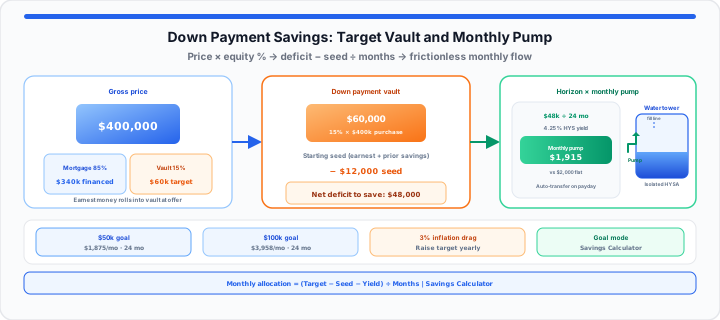
In practical environments, housing markets experience price inflation continuously. Reconciling your monthly budget demands accounting for rising home prices. Real estate values increase during long multi-year savings horizons. A three percent annual inflation rate increases future home prices. A four hundred thousand dollar home costs more next year. Your required down payment target grows alongside market prices. To combat inflation drag, route monthly allocations into high-yield accounts. Automated bank transfers remove friction from your savings discipline. Automated transfers move cash on payday before discretionary spending happens. High-yield cash accounts keep your capital liquid and growing safely. Keep down payment funds separated from daily checking account balances. Dedicated home purchase accounts prevent accidental spending leaks. Reviewing account statements monthly ensures you remain on schedule. Detailed monthly audits empower buyers during volatile real estate shifts. When I audit home purchase balances, disciplined automation wins. Isolating home savings from general emergency funds protects long-term stability. Never risk down payment capital in volatile stock market investments. Short savings horizons demand capital preservation over speculative growth. Below are primary diagnostic metrics from a sample home purchase audit.
- Target Home Purchase Budget: $400,000.00 estimated property cost.
- Required Equity Down Payment: 15.00% target equity share.
- Gross Down Payment Target: $60,000.00 total cash requirement.
- Initial Core Seed Deposit: $12,000.00 current liquid cash.
- Net Required Cash Deficit: $48,000.00 total savings goal.
- Target Liquidity Horizon: 24 Calendar Months.
- Base Unadjusted Monthly Contribution: $2,000.00 monthly cash deposit.
- High-Yield Interest Offset: 4.25% annual yield contribution.
- Adjusted Frictionless Monthly Allocation: $1,915.00 net monthly contribution.
Adjusted Monthly Target = (Gross Target Liability − Core Seed Deposit − Interest Yield) ÷ Horizon Months
Pair monthly savings pacing with payment stress tests in our mortgage payment vs monthly income guide and how much house can I afford budget guide. FHA buyers can sanity-check minimum equity with the FHA Loan Calculator.
Down Payment Monthly Allocation Reference Grid
Compare common down payment cash goals directly against timeline horizons below. This quick reference grid assumes a flat $5,000 initial starting seed. It maps net cash deficits across standard calendar month horizons. Monthly allocation targets divide net remaining cash deficits evenly across months. Initial seed deposits reduce required monthly contributions right from day one. Yield earnings from high-yield accounts will lower these required monthly numbers. Use these figures as an immediate benchmark for your home budget.
| Target Down Payment | Initial Seed Deposit | 12-Month Target Horizon | 24-Month Target Horizon | 36-Month Target Horizon |
|---|---|---|---|---|
| $20,000.00 Goal | $5,000.00 Seed | $1,250.00 / mo | $625.00 / mo | $416.67 / mo |
| $50,000.00 Goal | $5,000.00 Seed | $3,750.00 / mo | $1,875.00 / mo | $1,250.00 / mo |
| $100,000.00 Goal | $5,000.00 Seed | $7,916.67 / mo | $3,958.33 / mo | $2,638.89 / mo |
Open Savings Calculator Open Down Payment Calculator
Frequently Asked Questions
How do you calculate your monthly down payment savings target?
Subtract your initial starting seed from your total down payment target. Divide that remaining cash deficit by total months in your timeline. The resulting figure equals your unadjusted required monthly savings allocation.
Why does a savings calculator prevent budget shortfalls better than spreadsheets?
Online calculators incorporate interest compound formulas and dynamic timelines instantly. Manual spreadsheets often miss compound yield factors and unexpected fees. Interactive tools allow instant adjustments when home purchase targets change.
How does earnest money affect your down payment savings goal?
Earnest money is paid upfront when signing a purchase agreement. This cash deposit counts directly toward your total required down payment. It reduces the remaining cash owed at the final closing table.
Should you keep down payment savings in stock market index funds?
Stock market investments carry high short-term price volatility risk. A sudden market drop can reduce your home down payment capital. Keep short-term down payment funds in FDIC-insured high-yield accounts.