
You step out of your winter tent at dawn. The thermometer reads a stable twenty degrees Fahrenheit. Yet, cold air hits your face like iced steel. Your cheeks sting within seconds of exposure. A twenty-knot ridge wind is currently blowing outside. Static air temperatures lie to mountaineers every day. Wind velocity completely alters human thermal survival metrics.
Think of wind-chill as an aggressive heat accelerator. It steals stored warmth before layers trap it. Consider blowing hot steam off camp coffee. Your breath strips away the warm surface air. Alpine wind strips your thin skin heat layer identically. In high-altitude camping, wind kills fast. Unchecked convective cooling triggers hypothermia rapidly. Understanding wind physics keeps winter backcountry teams alive.
| Ambient Air Temp (°F) | Wind Velocity (MPH) | Calculated Wind-Chill (°F) | Frostbite Risk Exposure Window |
|---|---|---|---|
| 15°F | 15 mph | 0°F | Low risk with proper insulation |
| 15°F | 30 mph | -5°F | Moderate risk over extended exposure |
| 15°F | 45 mph | -10°F | High risk without windproof layers |
| 0°F | 15 mph | -19°F | Frostbite possible within 30 minutes |
| 0°F | 30 mph | -26°F | Frostbite likely within 15 minutes |
| 0°F | 45 mph | -32°F | Frostbite dangerous in 10 minutes |
| -15°F | 15 mph | -39°F | Frostbite occurs within 10 minutes |
| -15°F | 30 mph | -48°F | Severe frostbite under 5 minutes |
| -15°F | 45 mph | -55°F | Instant tissue freezing risk |
The Convective Boundary Layer
Thermal Disruption Analysis
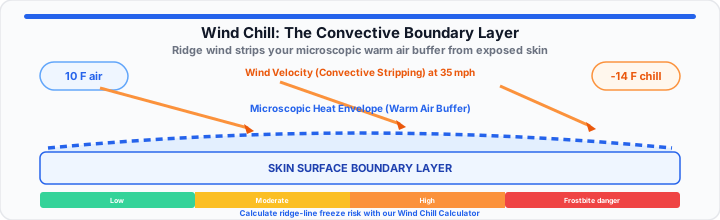
Your body constantly heats a microscopic air layer. This thin envelope rests directly against bare skin. It acts like natural thermal insulation in still air. Still air is a poor conductor of heat energy. Wind violently destroys this protective warm boundary envelope. Fresh cold air replaces your warm air constantly. The body must burn energy to reheat skin surfaces.
In winter field testing, skin cools instantly in gusts. Think of an auto radiator under high fan power. Heat leaves the metal core at extreme speed. Atmosphere pulls heat directly from exposed tissue. We express this mathematical formula using clear variables. Standard equations model North American polar weather profiles.
Twc = 35.74 + 0.6215Ta − 35.75V0.16 + 0.4275TaV0.16
Here, Ta represents ambient air temperature in Fahrenheit. The variable V equals wind velocity in miles per hour. Notice the fractional exponent value of zero point sixteen. This exponent proves wind cooling is non-linear.
Initial wind speed jumps cause extreme initial heat drops. A ten-mile breeze drops skin temperature significantly. Higher gusts continue stripping heat energy at scale.
Instant Tool: Simulate your thermal threshold with our interactive Wind Chill Calculator. Directly verify your ridge-line freeze risks before entering windy passes.
Sub-zero air accelerates frostbite on unprotected facial tissue. Numbness signals active thermal boundary failure. Cover all exposed skin before entering windy passes. For summer heat exposure on the opposite end of the spectrum, see our Heat Index Calculator and the wet-bulb vs. heat index guide.
The Heat-Dissipation Rate Variable
Velocity Multipliers
To get started, evaluate wind speed progression curves. Light breezes produce moderate convective cooling increases. Gales create extreme heat extraction rates instantly. Doubling wind speed does not double cold exposure linearly. Heat dissipation rates increase exponentially at low speeds.
The jump between five and fifteen miles per hour is massive. The jump between forty and fifty miles per hour levels off. Maximum skin heat extraction occurs rapidly above twenty knots. Mountain geography accelerates wind through natural topographic funnels. Ridge lines compress moving air masses significantly. Saddles and cols experience extreme Venturi effect acceleration.
When evaluating a treeline ridge, expect wind velocity doubling. Elevation gains increase ambient wind exposure exponentially. Valley camps might measure calm ten-mile winds. Exposed alpine slopes above treeline face forty-mile gales. Unit conversions remain critical during field calculations. One knot equals one point one five miles per hour. One meter per second equals 2.24 miles per hour. Mountain forecasts often report speeds in varying units. Convert all wind units before calculating freeze risks.
Ambient air temperature sets baseline molecular motion. Wind velocity acts as the primary thermal extraction engine. Cold air molecules absorb heat energy upon skin contact. Higher air speeds increase total molecular contact frequency. More cold air strikes bare skin every single second. Body core temperatures drop when surface heat vanishes. Muscles shiver to generate internal replacement heat. Shivering exhausts vital glycogen stores during mountain ascents. Exhausted climbers lose core temperature control rapidly.
Campsite Planning: Test your campsite elevation exposures early. You can map out your risk metrics using our Wind Chill Calculator. Pair with the Wet-Bulb Calculator when evaluating mixed cold-humid conditions.
The Backcountry Thermal Buffer
Practical Frostbite Prevention
In practical environments, shelter selection creates immediate safety buffers. Snow walls block aggressive wind vectors effectively. Engineered snow barriers reduce campsite wind speeds dramatically. A proper wall drops local velocity by seventy percent. Lower wind speeds preserve microclimate temperatures near tents. Position snow structures perpendicular to prevailing storm winds. Angle wall faces at forty-five degrees to deflect gusts upwards. Build wall heights at least 1.5 meters high. Place tents two meters downwind from snow walls. This creates a dead-air pocket over sleeping shelters. Dead-air zones prevent convective heat loss from tent fabrics.
Consider this isolated technical field calculation scenario:
- Base camp elevation: 9,500 feet above sea level
- Measured ambient temperature: 10°F (−12.2°C)
- Unsheltered ridge wind velocity: 35 mph (30.4 knots)
- Standard calculated wind-chill index: −14°F (−25.6°C)
- Exposed skin frostbite risk window: 30 minutes active exposure
Constructing a dense structural snow wall alters local metrics:
- Reduced campsite wind velocity: 10 mph (8.7 knots)
- Adjusted campsite wind-chill index: −4°F (−20°C)
- Protected frostbite risk window: Extended beyond 60 minutes
Thermal safety margins expand significantly behind windbreaks. Always monitor local weather shifts during winter ascents. Mountain winds can double in speed without temperature drops. Unprepared hikers face sudden freeze risks on open ridges. Carry windproof hard-shell layers in your outer pack pockets. Goggles protect corneal tissue from high-velocity freeze damage. Face masks prevent rapid breathing heat loss in storms. Never compromise on wind protection gear during winter ascents.
Open Wind Chill Calculator Open Heat Index Calculator
Frequently Asked Questions
Does wind chill affect your camp gear or electronics?
Wind chill only accelerates heat loss toward ambient temperature. Inanimate objects do not cool below actual air temperature. However, cold winds drain battery charge rates much faster. Wind speeds also stress tent poles and fabric seams.
At what wind-chill factor does frostbite occur in under 30 minutes?
Wind-chill values below −18°F cause frostbite in thirty minutes. At −35°F, exposed skin freezes in ten minutes. Stronger winds accelerate freezing times on nose and cheeks. Always cover bare skin when wind-chill drops below zero.
How do elevation gains impact backcountry wind-chill risk?
Wind speeds increase significantly at higher mountain elevations. Topographic ridges funnel and compress air streams exponentially. Ambient temperatures also drop 3.5 degrees per thousand feet. Combined effects dramatically heighten winter frostbite risks on peaks.
Can a tent protect against severe wind-chill heat loss?
Yes, solid tent walls block convective wind vector force. Tents stop moving air from stripping trapped fabric heat. Inside a tent, wind chill equals ambient air temperature. Good shelters eliminate wind acceleration factors on human skin.