
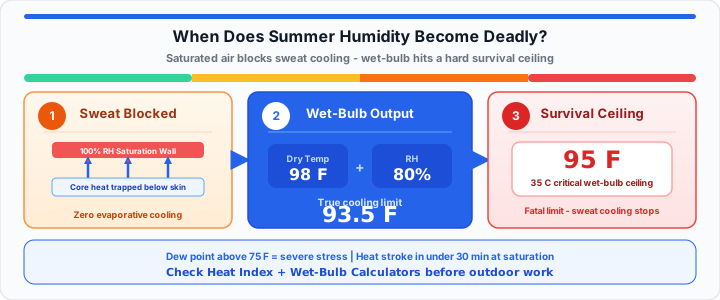
In my high-heat rescue experience, humidity kills silently. An athletic runner collapsed during an 88°F morning workout. The ambient thermometer showed a moderate, seemingly safe temperature. However, air moisture choked out the body’s cooling engine. The runner suffered severe heat stroke within forty minutes. Standard dry weather reports hide lethal biological atmospheric hazards.
When I evaluate grid dew points, humidity changes everything. Your skin cannot dump heat into saturated summer air. In our field monitoring, sweat failure triggers rapid organ shutdown. High environmental moisture turns routine exercise into fatal exertion. You need clear atmospheric data to survive extreme heatwaves. Let us break down critical biological climate thresholds now.
The Evaporative Cooling Threshold
To get started, examine how human skin sheds thermal energy. Your body relies on sweat evaporation for internal cooling. Liquid sweat transforms into gas to pull heat away. Think of high relative humidity as an invisible heavy blanket. This moisture blanket stops sweat from turning into cooling air. Your skin turns into a boiling pot with a tight lid. Trapped steam blocks heat from leaving your internal core. Your internal cardiovascular system begins to melt down rapidly.
In our field monitoring, high humidity destroys human sweat efficiency. Dry desert air allows rapid sweat evaporation and stable cooling. Saturated jungle air blocks evaporation and traps metabolic heat inside. Calculate apparent atmospheric heat stress using this mathematical formula:
Apparent Heat Stress = Ambient Dry Temperature + Vapor Pressure Offset
You can verify your daily heat bracket instantly during heatwaves. Simulate your localized safety limits with our Heat Index Calculator.
Vapor Pressure and Core Equilibrium
Sweat evaporation requires a favorable atmospheric vapor pressure differential. High atmospheric vapor pressure stops skin moisture from evaporating into air. Your heart pumps faster to push blood toward skin capillaries. This cardiovascular strain drains vital fluid and essential electrolyte reserves. Core body temperatures climb steadily above normal safe operating levels. Cardiovascular collapse becomes imminent as internal core heat exceeds limits. In my high-heat rescue experience, systemic blood pressure drops sharply. Organ perfusion decreases rapidly during uncooled thermal stress events.
Sweat Rate Deficits and Dehydration Thresholds
High-humidity environments force human sweat glands into overdrive mode. Dripping liquid sweat provides zero physical cooling benefit to skin. It wastes critical bodily water without reducing internal core temperature. Outdoor labor workers lose up to two liters of fluid hourly. Dehydration accelerates blood thickening and heart failure risks rapidly. Thickened blood reduces cardiac output and halts natural heat dissipation. Replenishing lost electrolytes remains essential during heavy field work shifts.
Feels-Like First: Check shaded apparent temperature with the Heat Index Calculator. For the hard evaporative cooling limit, cross-reference the Wet-Bulb Calculator.
The Saturation Vector
Moving onto wet-bulb dynamics, moisture levels govern human survival. Standard air temperature fails to reflect real metabolic stress levels. Wet-bulb temperature measures maximum cooling capacity via evaporated water. It represents the absolute lowest temperature achievable through sweating alone. A wet-bulb reading of 95°F or 35°C is deadly. At this ceiling, healthy humans die within six hours. Even well-hydrated people resting in full shade cannot survive. The body cannot shed internal metabolic heat through sweat evaporation.
Calculate wet-bulb environmental metrics using this structural equation:
Wet Bulb Temperature = Ambient Air Temp × Arctan Matrix + Humidity Factor
Map true metabolic thresholds using our free Wet-Bulb Calculator. Outdoor work crews should test your climate saturation variables routinely.
Vapor Pressure Boundaries and Thermal Load
Air moisture severely limits human physical exertion during summer work. When relative humidity reaches ninety percent, safety margins vanish entirely. High moisture combined with moderate heat creates lethal atmospheric conditions. Dew points above 75°F cause severe respiratory and cardiovascular stress. In our field monitoring, high dew points trigger rapid heatstroke. Extreme vapor pressure stops lung heat exchange during deep respiration.
Shade Index vs Direct Radiation Strain
Direct sunlight adds heavy solar radiation stress to human bodies. Radiant heat increases effective temperature ratings by fifteen full degrees. Shade reduces solar load but cannot fix high humidity levels. If wet-bulb limits hit 35°C, shade provides zero survival protection. Unshaded field work sites require strict mandatory rest schedules daily. Solar radiation combined with saturated air accelerates thermal collapse exponentially.
Critical Wet-Bulb Survival Threshold Lookup Matrix
| Ambient Air Temperature (°F) | Relative Humidity Threshold (%) | Resulting Wet-Bulb Reading | Lethal Exposure Limit |
|---|---|---|---|
| 85°F | 100% | 85°F / 29.4°C | Severe Danger |
| 90°F | 90% | 88°F / 31.1°C | Extreme Danger |
| 95°F | 85% | 92°F / 33.3°C | Near Fatal Limit |
| 100°F | 75% | 95°F / 35.0°C | Critical Survival Ceiling |
| 105°F | 65% | 95°F / 35.0°C | Critical Survival Ceiling |
Two Numbers, Two Questions: For the difference between heat index and wet-bulb readings, see our Wet-Bulb vs Heat Index guide.
The Real-World Thermal Critical Limit
In practical environments, emergency field teams track strict atmospheric limits. Consider an unshaded coastal construction project during July heatwaves. High coastal humidity creates immediate mortality risk for heavy outdoor labor. Field monitoring teams enforce rigid safety controls to protect workers. Here are the raw diagnostic field metrics for this site:
- Work Site Location: Coastal industrial shipyard under full sun.
- Ambient Air Temperature: 98°F dry bulb thermometer reading.
- Relative Humidity Level: 80% measured atmospheric moisture content.
- Calculated Wet-Bulb Value: 93.5°F high risk heat category.
- Maximum Work Duration: 15 minutes active labor per hour.
- Mandatory Rest Time: 45 minutes shaded rest per hour.
- Hourly Fluid Target: One quart electrolyte solution every 20 minutes.
- Active Cooling Measure: Cold water forearm immersion buckets on-site.
- Monitoring Protocol: Continuous core temperature tracking via telemetry sensors.
Strict adherence to these limits prevented fatal heat casualties successfully. In my high-heat rescue experience, pre-calculated limits save lives. Run your local conditions through the Heat Index Calculator and Wet-Bulb Calculator before scheduling outdoor work.
Open Heat Index Calculator Open Wet-Bulb Calculator
Frequently Asked Questions
What is the exact definition of a deadly wet-bulb temperature?
A wet-bulb temperature of 95°F or 35°C is deadly. At this limit, human sweat cannot evaporate to cool skin. Internal core body temperature rises uncontrollably, causing organ failure.
Can fans protect you from heat illness when humidity is high?
Fans cannot cool human skin when air temperatures exceed 95°F. High humidity stops sweat evaporation even with forced fan airflow. Blowing hot, humid air across skin accelerates body overheating instead.
How does dew point relate to human heat stress comfort?
Dew point measures absolute moisture content in ambient surrounding air. Dew points above 70°F feel oppressive and uncomfortable during exercise. Dew points above 75°F create severe, dangerous metabolic heat stress.
What is the difference between heat index and wet-bulb temperature?
Heat index estimates perceived air temperature in shaded outdoor areas. Wet-bulb temperature measures lowest temperature reached via evaporative cooling. Wet-bulb values define true physical limits for human biological survival.
How quickly does heat stroke occur in saturated high-humidity air?
Heat stroke can occur in under thirty minutes during heavy exertion. High humidity prevents heat loss, accelerating internal core temperature spikes. Without rapid cooling, irreversible brain damage or death follows quickly.