
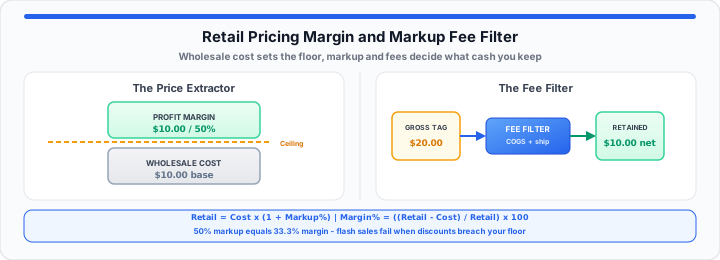
Matching a competitor’s discount code can destroy your business. In our warehouse testing, a flash sale destroyed profit margins. Unseen shipping overhead consumed the entire net revenue margin. Daily cash earnings vanished before supplier invoices arrived. Your wholesale cost forms a rigid baseline foundation. Think of a percentage markup as a capital shield. A markup buffer keeps your shop afloat during sales.
Picture your product pricing as a water bucket. Wholesale product costs fill up the bucket’s bottom half. Target profit margins occupy the clear space on top. Hidden shipping fees punch holes in that clear profit space. Cash drains out quickly, leaving your business dry. To get started, review our retail pricing lookup table below. You can verify your product markup limits instantly with the Percentage Calculator.
| Wholesale Unit Cost | Target Gross Margin | Required Retail Price | Required Raw Dollar Markup | Markup Percentage Equivalent |
|---|---|---|---|---|
| $10.00 | 30.0% | $14.29 | $4.29 | 42.9% |
| $10.00 | 40.0% | $16.67 | $6.67 | 66.7% |
| $10.00 | 50.0% | $20.00 | $10.00 | 100.0% |
| $25.00 | 30.0% | $35.71 | $10.71 | 42.9% |
| $25.00 | 40.0% | $41.67 | $16.67 | 66.7% |
| $25.00 | 50.0% | $50.00 | $25.00 | 100.0% |
| $50.00 | 30.0% | $71.43 | $21.43 | 42.9% |
| $50.00 | 40.0% | $83.33 | $33.33 | 66.7% |
| $50.00 | 50.0% | $100.00 | $50.00 | 100.0% |
The Cost Baseline Constant
Wholesale inventory invoices establish your absolute financial baseline. Every retail listing must account for initial purchase expenditures. When I evaluate supplier wholesale shifts, price adjustments happen fast. Raw cost increases force immediate retail price revisions. Calculating percentage increases requires exact baseline cost figures. Subtract original cost from new wholesale invoice figures. Divide that raw dollar difference by original cost. Multiply by one hundred to determine supplier price increases. We express this price adjustment rule using clean typography:
Percentage Increase = ((New Cost − Original Cost) ÷ Original Cost) × 100
Moving onto store pricing, markups build upon wholesale costs. Calculate target retail prices by multiplying costs by markup factors:
Retail Price = Wholesale Cost × (1 + (Markup Percentage ÷ 100))
In my shop operations experience, inaccurate markups drain cash. You can simulate your pricing tiers with our interactive Percentage Calculator now, or track supplier hikes with the Percentage Change Calculator.
Gross Margin Floors
Gross margin floors protect store solvency during sales downturns. Define absolute minimum acceptable net profit margins per category. Never allow promotional discounts to breach defined margin floors. Store managers track margin floors across every inventory SKU. Margin floors prevent accidental cash losses during flash sales. Review gross margin floors during monthly inventory audits with the Margin Calculator.
Wholesale Surcharge Adjustments
Suppliers add freight surcharges during sudden global fuel spikes. Incorporate freight fees directly into total wholesale cost bases. Failing to include shipping charges inflates perceived profit margins. Recalculate retail prices whenever wholesale surcharges adjust upward. Track invoice surcharge line items across all inventory shipments. Adjust retail listing prices to reflect true landed costs.
COGS Inventory Foundations
Cost of Goods Sold includes all landed item expenses. Sum packaging, customs clearance, and inbound freight into COGS. Accurate COGS tracking establishes true baseline product expenses. Solid baseline metrics prevent structural pricing errors at checkout. Audit wholesale expense logs monthly to maintain baseline accuracy. Baseline accuracy protects overall profit margins across product lines. For commission-heavy sales teams, cross-check overhead with our guide on sales commission overhead for small business founders.
The Margin Erosion Variable
Confusing markups with profit margins ruins store cash flow. A fifty percent markup does not equal fifty percent margin. Markup measures profit relative to wholesale unit cost figures. Margin measures profit relative to final retail listing prices. A fifty percent markup yields a thirty-three percent margin. In practical environments, this distinction determines business survival. Calculate gross profit margin percentage using this standard formula:
Gross Margin Percentage = ((Retail Price − Wholesale Cost) ÷ Retail Price) × 100
We define the markup percentage relationship through this rule:
Markup Percentage = ((Retail Price − Wholesale Cost) ÷ Wholesale Cost) × 100
When wholesale costs rise, margins shrink without price increases. You can map out your real net returns using the Margin Calculator today. Be sure to test your custom pricing adjustments with the Discount Calculator before running sales.
Retail Price Tag Boundaries
Market competition limits absolute retail price ceiling expansion options. Customers reject listings that exceed established industry price boundaries. Optimizing profit margins requires strict control over wholesale costs. Negotiate bulk volume pricing discounts with suppliers directly. Lower wholesale purchase costs expand net profit margins safely. Maintain competitive pricing while protecting essential profit margins.
Shipping Overhead Friction
E-commerce fulfillment expenses erode gross profit margins very quickly. Pick, pack, and carrier fees diminish net profit margins. Incorporate total estimated shipping costs into wholesale baselines. Untracked shipping fees convert profitable items into cash losses. Monitor shipping expense rate increases across major carrier networks. Update product shipping charges to cover real fulfillment expenses.
Net Revenue Retention Limits
Net revenue reflects actual earnings after accounting for returns. Return processing fees erode initial retail sales transaction margins. Monitor product return rates across every active inventory category. Adjust retail listing prices upward on high-return product lines. High return rates require wider margin cushions for safety. Factor expected return rates into baseline price markups. Measure campaign ROI with the ROI Calculator after promotional events.
The Markdown Velocity Matrix
Clearing old inventory requires precise mathematical discount calculations. Discounting prices blindly risks severe store capital losses. Measure inventory holding costs against potential markdown margin losses. Calculate promotional sale prices using this discount formula:
Discounted Price = Original Retail Price × (1 − (Discount Percentage ÷ 100))
Key operational parameters for markdown velocity strategies include:
- Clearance Floor Target: Maintain prices above baseline wholesale costs.
- Holding Cost Metric: Track monthly warehouse storage fees per unit.
- Markdown Rate Ratio: Calculate percentage reduction from original price.
- Breakeven Velocity Limit: Determine minimum sales needed to cover costs.
- Capital Recycling Rate: Speed up cash reinvestment into inventory.
- Liquidation Threshold Cutoff: Sell stagnant stock at landed cost.
Clearance Rate Calculations
Track weekly sales volume increases during promotional discount events. Higher sales velocity offsets reduced per-unit profit margin values. Ensure total promotional revenue exceeds baseline holding cost metrics. Evaluate clearance campaign performance daily to protect cash flow. Fast inventory turnover releases locked working capital for growth. Reinvest cleared capital into high-demand product categories quickly.
Liquidation Threshold Limits
Set strict liquidation boundaries for end-of-season inventory clearance. Never discount active stock below total landed COGS limits. Liquidating stock at landed cost recovers capital for replenishment. Reinvest recovered capital into high-margin inventory categories immediately. Landed cost recovery prevents permanent business equity destruction. Protect underlying business capital during clearance sales events.
Dynamic Price Decay Ratios
Implement tiered markdown schedules based on inventory aging metrics. Reduce prices by fifteen percent after sixty days in stock. Increase discount rates to thirty percent after ninety days. Automate price decay schedules to maintain steady cash flow. Structured price reductions clear aging stock systematically over time. Automated markdown triggers eliminate manual price adjustment delays. Model percentage shifts with the fractions to decimals and percentages guide, and plan cash flow with the Budget Calculator. Add tax at checkout with the Sales Tax Calculator.
Open Percentage Calculator Open Margin Calculator
Frequently Asked Questions
What is the formula for calculating a retail percentage increase?
Subtract the old price from the new price figure. Divide that difference by the original starting price value. Multiply the resulting decimal number by one hundred directly. The final result gives your exact percentage increase figure.
Why is a 40% profit margin different from a 40% markup?
A forty percent markup adds forty percent to cost. A forty percent margin means forty percent is profit. Markup calculates profit as a percentage of wholesale cost. Margin calculates profit as a percentage of retail price.
How do you calculate required retail price from wholesale cost?
Subtract target margin percentage decimal from the number one. Divide wholesale unit cost by that resulting decimal value. The resulting figure represents required retail listing price. For example, divide ten dollars by zero point six.
What happens to profit margins when shipping costs increase?
Unadjusted shipping cost increases erode gross profit margins directly. Higher fulfillment fees increase landed COGS baseline expenses. Raise retail prices or negotiate carrier discounts immediately. Failure to adjust prices causes net cash flow losses.