
Stepping off a transcontinental flight into freezing rain ruins trips instantly. In my global travel experience, misreading foreign weather reports causes chaos. Unprepared travelers freeze in thin shorts on cold mountain passes. Think of your native temperature reading as a regional framework. It is a raw index waiting for suitcase translation. Think of Celsius as a ten-story hotel building. Zero degrees sits at the frozen basement floor line. Ice builds fast on basement pipes at this point. Climbing each floor represents a massive vault upward in heat. Fahrenheit splits each floor into tiny, precise step levels. This micro-scale helps you pick pinpoint daily clothing options. Wrong thermal estimates force unexpected luggage fees at airport check-in. Accurate weather scaling protects your comfort across international borders. Proper wardrobe logistics keep your travel itinerary running smoothly. Mastering thermal ratios eliminates guesswork before closing your suitcase. To get started, evaluate your destination forecast carefully today. Misjudging foreign weather leads to ruined vacation days quickly. Avoid buying expensive emergency jackets at airport tourist shops. Precise temperature translation ensures complete packing confidence everywhere.
The Baseline Thermal Constant
Sub-Zero Boundaries and Legacy Conversion Baselines
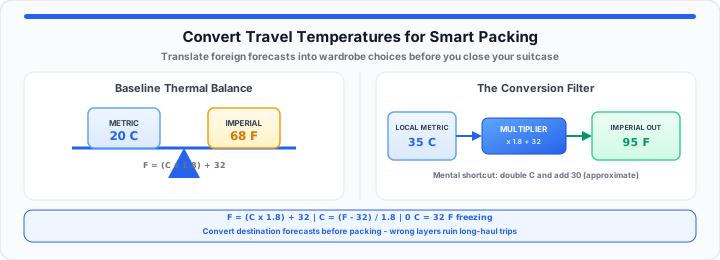
Foreign weather broadcasts display metric numbers to international arrivals. In our luggage weight testing, thermal errors increase bag volume. A baseline twenty degrees Celsius equals sixty-eight degrees Fahrenheit. The exact scale conversion formula is:
°F = (°C × 1.8) + 32
The reverse metric adjustment formula is:
°C = (°F − 32) ÷ 1.8
When I evaluate destination forecasts at the airport gate, precision matters. Freezing conditions begin precisely at zero degrees Celsius. That point aligns with thirty-two degrees on imperial thermometers. High humidity distorts how thermal metrics feel on your skin. Tropical heat requires breathable linen fabrics and UV protection. Sub-zero mountain winds require heavy insulated parkas and thermals. Bag space vanishes when you pack unnecessary backup layers. You can simulate your packing adjustments with our instant Celsius to Fahrenheit Converter now. Travelers should verify your destination climate parameters instantly before departure. Static baseline metrics stabilize international route planning for group tours. Baseline numbers give you an anchor for foreign destinations. Understanding thermal constants prevents miserable wardrobe choices during excursions. Convert your numbers early to streamline packing manifests. Cold snaps punish travelers who ignore precise scale differences. Proper thermal baseline tracking keeps your baggage light. In practical environments, precise calculations prevent expensive local clothing purchases. Understanding metric shifts keeps group travel logistics under control. Scale differences impact how long-distance hikers select outerwear layers. Accurate baseline data prevents thermal shock when landing abroad. Track regional weather trends alongside primary temperature readings daily. Solid preparation turns complex international forecasts into clear choices.
The Fractional Multiplier Vector
Fractional Scale Approximations and Street-Level Calculations
Street decisions require rapid mental math without digital tools. Double the Celsius number and add thirty for fast estimates. Thirty degrees Celsius doubled becomes sixty in your head. Adding thirty yields an estimated ninety degrees Fahrenheit output. The actual exact calculation total reaches eighty-six degrees Fahrenheit. This four-degree variance changes your footwear selection noticeably. Mental shortcuts help when walking through foreign outdoor markets. Actual packing decisions demand exact data calculations before departure. When I evaluate destination forecasts at the airport gate, errors show. Luggage constraints punish rough mental guesses on long trips. You should map out your raw weather data lines using the Celsius to Fahrenheit Converter today. Expedition leaders can test your custom scaling options with the Heat Index Calculator to verify gear manifests for humid destinations. Moving onto high-altitude routes, ambient air drops quickly. Sub-zero shifts require thermal underwear and windproof outer shells. Use this convert travel temperatures packing guide table below. It maps foreign temperature reads directly to wardrobe recommendations. Exact calculations remove guesswork from complex multi-week packing lists. Small decimal shifts alter clothing needs across changing elevation zones. Coastal sea breezes cool cities below reported inland forecasts. Urban heat islands raise temperatures above regional weather predictions. Precise scaling protects sensitive gear and personal comfort everywhere. Relying on rough approximations risks severe gear mismatches abroad. Smart travelers double-check conversion results before closing carry-on luggage.
| Destination Celsius (°C) | Fahrenheit Output (°F) | True Climate Feel | Concrete Wardrobe Recommendations |
|---|---|---|---|
| 0°C | 32.0°F | Freezing Point | Heavy down parka, thermal layers, insulated gloves |
| 10°C | 50.0°F | Crisp & Cool | Light jacket, wool sweater, long pants |
| 20°C | 68.0°F | Mild & Pleasant | Long sleeve shirt, light denim, comfortable sneakers |
| 30°C | 86.0°F | Warm & Humid | Breathable cotton t-shirt, shorts, sun hat |
| 40°C | 104.0°F | Extreme Heat | Ultra-light linen wear, hydration pack, sunglasses |
The Global Destination Packing Protocol
High-Altitude Mountain Climate Variances and Multi-Stop Manifests
Multi-city itineraries challenge even veteran travel operations managers. Cross-continental routes expose travelers to drastic thermal swings. Convert multi-nation forecasts into one structured packing manifest. We list raw route metrics and gear parameters directly below.
- Tokyo Spring Route: 15°C equals 59°F requiring light trench coats.
- Reykjavik Alpine Baseline: 2°C equals 35.6°F demanding windproof thermal parkas.
- Dubai Desert Zone: 42°C equals 107.6°F requiring moisture-wicking sun attire.
- Perth Coastal Climate: 25°C equals 77°F suitable for breathable shorts.
- Quito Mountain Altitude: 11°C equals 51.8°F requiring mid-layer fleece jackets.
- Singapore Equatorial Band: 32°C equals 89.6°F demanding lightweight rain shells.
In our luggage weight testing, modular layers solve multi-climate routes. Consolidating gear parameters prevents over-packing heavy winter items. Track destination metrics accurately to avoid airport baggage penalties. Weather adjustments keep tour groups comfortable across diverse environments. Verify temperature spreads across all planned itinerary stops early. Precise packing matrices maximize suitcase space on long trips. High-altitude climbs demand specialized thermal gear regardless of season. Tropical downpours lower effective feel despite warm ambient readings. Layering synthetic fabrics provides flexibility across shifting weather fronts. Operational success depends on accurate weather data for every leg. Experienced guides prepare gear manifests for worst-case weather scenarios. Smart preparation keeps travel stress low during long international journeys. For cold-weather legs, cross-check wind exposure with the Wind Chill Calculator and humid heat with the Wet-Bulb Calculator before finalizing your layer list.
Open Celsius to Fahrenheit Converter Open Heat Index Calculator
Frequently Asked Questions
What is the fastest way to convert Celsius to Fahrenheit in your head?
Double the Celsius temperature reading and add thirty. This celsius to fahrenheit travel hack gives a quick estimate. Use exact tools for packing bags.
Why do different countries use different temperature measurement scales for weather reports?
Most nations use metric Celsius for scientific standard consistency. The United States uses legacy imperial Fahrenheit for daily weather.
How does humidity affect weather temperature conversion chart for packing decisions?
High humidity increases perceived ambient heat on human skin. Add five degrees Fahrenheit mentally when packing for tropical regions.
What clothing layers work best for unexpected foreign temperature drops?
Pack lightweight merino wool base layers for high versatility. Merino wool insulates well without adding heavy baggage bulk.
How do altitude shifts impact destination temperature calculations?
Temperatures drop roughly three degrees Fahrenheit per thousand feet gained. Account for elevation changes when planning mountain trekking trips.