
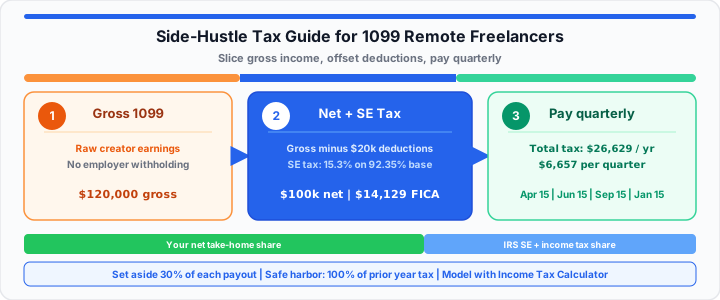
When I reconcile a 1099 ledger, panic appears often. New remote freelancers face massive tax sticker-shock every spring. Traditional W2 paychecks resemble pre-sliced pizza boxes. Your employer already cut out government tax slices for you. 1099 freelance income is a whole raw pie instead. You must bake and manually cut this pie yourself later.
Think of your 1099 income as raw, unpasteurized cash. You cannot spend it all freely right away. A fixed portion belongs to the IRS out of the gate. Forgetting the 15.3% self-employment multiplier creates painful financial leaks. In our financial reviews, unreserved tax balances destroy freelance savings. In my freelancing experience, proactive tracking protects your earnings. Let us break down cold tax math to slice liabilities.
The Self-Employment Tax Baseline
To get started, isolate your baseline FICA tax obligations. W2 employees split Social Security and Medicare taxes with bosses. As an independent contractor, you occupy both roles simultaneously. You pay the full 15.3% self-employment rate alone. Social Security takes 12.4% on earnings up to statutory caps. Medicare claims 2.9% on all net freelance profits without limits. High earners face an additional 0.9% Medicare surtax rate.
Calculate your self-employment tax base using standard tax math:
Self-Employment Tax Base = Net Freelance Profit × 0.9235
Total SE Tax Obligation = Tax Base × 0.153
In my freelancing experience, creators forget this baseline tax completely. They calculate income tax while ignoring the self-employment multiplier. This calculation oversight leads to massive unexpected IRS bill surprises. You can verify your self-employment bracket instantly to protect earnings. Always simulate your 1099 liability with our interactive Income Tax Calculator.
State Tax Variances and FICA Threshold Limits
Federal income tax brackets stack directly on top of FICA. State income taxes add another distinct layer of liability. California takes up to 13.3% on top earnings. New York charges up to 10.9% on high income brackets. Texas and Florida charge zero state personal income taxes. FICA Social Security taxes cap at specific wage thresholds yearly. Net earnings above that cap incur only Medicare charges. Understanding state thresholds prevents severe cash flow shortages. In our financial reviews, state taxes double total tax burdens. Factor local municipal taxes into your primary ledger calculations.
SE Tax Math: Model your full 15.3% FICA obligation on net profit using the Income Tax Calculator. Compare W2 vs 1099 take-home with the Take Home Paycheck Calculator.
The Deductible Expense Offset
Moving onto write-offs, smart tracking slashes your tax base. The IRS taxes net business profit, not gross revenue. Every ordinary and necessary business expense reduces tax obligations. Tracking software subscriptions lowers your adjusted gross income base. Hardware purchases, home internet, and domain fees count as deductions. Physical home office square footage yields direct tax write-offs.
Calculate taxable net freelance income using this core formula:
Taxable 1099 Income = Gross Earnings − Eligible Expenses
When I reconcile a 1099 ledger, missed expenses cost thousands. A creator earning $80,000 gross with $15,000 deductions saves significantly. Their tax liability drops by over $2,200 in FICA alone. Higher income tax bracket savings stack on top instantly. You can map out your adjusted net tax burden using this free Income Tax Calculator. Be sure to test your deduction margins before filing taxes.
Write-off Limits and Ordinary Business Expenses
The IRS enforces clear rules for deductible business spending. Expenses must be ordinary and necessary for your specific trade. Software developers can deduct cloud server hosting fees easily. Designers can deduct digital asset subscriptions and monitor arms. Vehicle mileage requires detailed mileage log tracking throughout years. Standard mileage rates allow tax deductions per business mile driven. Business meals offer a fifty percent deduction allowance currently. Keep all digital receipts stored in organized cloud drives. Unsubstantiated expense claims get rejected during official IRS audits.
Deduction Planning: Run gross revenue minus eligible expenses through the Income Tax Calculator to see how write-offs shrink both FICA and income tax layers. For broader freelancer tax strategy, see our 1099 Tax Recovery Playbook.
The Estimated Quarterly Liability Balance
In practical environments, waiting until April creates massive penalty fees. The IRS operates on a strict pay-as-you-go tax collection system. If you expect to owe over $1,000, send quarterly estimates. Failure to pay quarterly results in underpayment interest penalties.
IRS Quarterly Estimated Tax Payment Schedule
| Payment Quarter | Earning Period Covered | IRS Payment Due Date |
|---|---|---|
| Quarter 1 | January 1 – March 31 | April 15 |
| Quarter 2 | April 1 – May 31 | June 15 |
| Quarter 3 | June 1 – August 31 | September 15 |
| Quarter 4 | September 1 – December 31 | January 15 (Following Year) |
In our testing, allocating thirty percent of payouts protects liquidity. Consider a remote developer earning fluctuating project revenue payouts. Here are the raw diagnostic ledger metrics for this developer:
- Annual Projected Gross 1099 Revenue: $120,000 total income.
- Total Deductible Operating Expenses: $20,000 total write-offs.
- Calculated Net Taxable Business Earnings: $100,000 net baseline.
- Estimated Annual Self-Employment Tax Obligation: $14,129 FICA liability.
- Estimated Annual Income Tax Liability: $12,500 federal share.
- Total Combined Annual Tax Target: $26,629 total tax.
- Required Quarterly Estimated Voucher Payment: $6,657 per quarter.
Safe Harbor Rules and Penalty Avoidance
Safe harbor rules protect freelancers from unexpected tax penalty assessments. Pay 100% of last year’s total tax bill currently. High earners making over $150,000 must pay 110% instead. Meeting safe harbor eliminates underpayment penalties even if income spikes. This rule provides financial peace during high growth years. Calculate your safe harbor baseline using prior tax returns. Divide that baseline total by four equal quarterly payments. Run your numbers through our Income Tax Calculator today.
Open Income Tax Calculator Open Take Home Paycheck Calculator
Frequently Asked Questions
What happens if you miss an IRS quarterly estimated tax deadline?
Missing a quarterly tax deadline triggers IRS underpayment penalties. The IRS charges interest on unpaid amounts per quarter. Pay as soon as possible to minimize compounding penalty fees.
How do safe harbor rules protect freelancers from underpayment penalties?
Safe harbor rules set minimum quarterly payment thresholds for taxpayers. Paying 100% of prior year liability avoids underpayment penalties. High earners must pay 110% of prior year tax.
Can I deduct home office expenses on 1099 income?
Yes, you can deduct dedicated home office workspace areas. The space must be used exclusively and regularly for business. Use either simplified square footage rates or actual cost methods.
What is the self-employment tax rate for 1099 contractors?
The federal self-employment tax rate equals 15.3% currently. Social Security accounts for 12.4% of net business earnings. Medicare tax accounts for the remaining 2.9% share.
How do state taxes affect 1099 quarterly estimated payments?
State taxes require separate quarterly estimated tax voucher filings. Most states follow federal quarterly payment due date schedules. Calculate state estimates based on net state business earnings.