An emergency bill pushes you toward a fast personal loan. The advertised rate looks low until the first statement lands with fees you never modeled. Marketing highlights nominal APR; contracts bury origination and processing charges in fine print. Before you sign, run the same math lenders use internally—starting with our Simple Interest Calculator and Personal Loan Calculator.
Simple interest behaves like a flat daily rental meter on principal: it does not spawn “baby interest” on unpaid interest the way compounding does. That predictability helps short horizons—see simple vs. compound interest for the long-run contrast.
Quick check: Plug principal, rate, and term into the Simple Interest Calculator, then compare payment schedules on the Personal Loan Calculator before you accept an offer.
Step 1: Separate gross principal from net cash
Loan principal is the contractual debt balance—the number interest usually applies to. Gross principal is what you owe on paper; net proceeds are what hits your checking account after upfront deductions.
A five percent origination fee on $2,000 costs $100. You receive $1,900 but often owe interest on $2,000. Always compute interest against the gross figure in your note, then subtract fees from net cash to see true borrowing expense.
I = P × r × t
Total Repayment = Principal + Interest
Convert nominal rates to decimals (12% → 0.12) with the Interest Calculator when you toggle between loan modes.
Sample simple-interest totals (12% nominal, no extra fees)
| Principal | Term | Rate | Interest | Total repayment |
|---|---|---|---|---|
| $500 | 3 mo (0.25 yr) | 12% | $15.00 | $515.00 |
| $500 | 6 mo (0.50 yr) | 12% | $30.00 | $530.00 |
| $1,000 | 6 mo (0.50 yr) | 12% | $60.00 | $1,060.00 |
| $1,000 | 12 mo (1.00 yr) | 12% | $120.00 | $1,120.00 |
| $2,500 | 12 mo (1.00 yr) | 12% | $300.00 | $2,800.00 |
Step 2: Convert the term to years for simple interest
Simple interest scales linearly with time. Express the horizon as a fraction of one year before multiplying:
- Three months → 0.25 year
- Six months → 0.50 year
- Ninety days → 90 ÷ 365 ≈ 0.25 year (use your contract’s day-count rule if specified)
Example: $1,000 × 0.12 × 0.50 = $60 interest over six months. Misaligned time units are a common reason borrowers underestimate total repayment.
Step 3: Reconcile fees and find effective APR
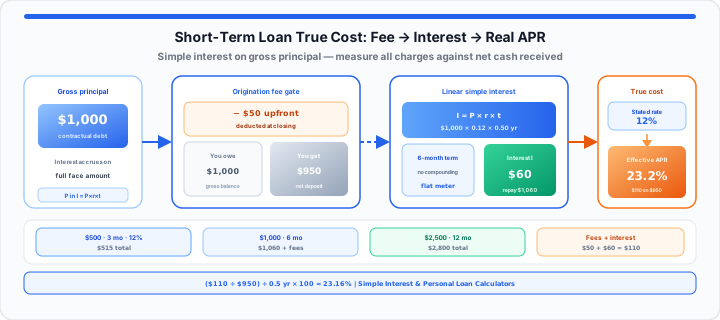
Itemize every upfront surcharge, then add total simple interest. Compare that bundle to net cash received, not gross principal. A $50 processing fee on a $1,000 / 12% / six-month loan changes the story:
- Gross borrowed principal: $1,000.00 contractual base.
- Upfront origination charge: $50.00 deducted at closing.
- Net capital disbursed: $950.00 usable cash.
- Linear accrued interest: $60.00 over six months.
- Total finance charges: $50 + $60 = $110.00.
- Effective borrowing cost: ($110 ÷ $950) ÷ 0.50 × 100 ≈ 23.16% APR.
Stated 12% nominal rate plus fees can land near 23% on the dollars you actually spend. Cross-check disclosures with the APR Calculator and amortization details on the Loan Calculator.
Common contract traps on short-term loans
- Quoting rate without fees while interest accrues on gross principal.
- Late-payment penalties that compound after a missed due date.
- Prepayment penalties that erase savings from early payoff.
- Assuming compound growth when the note is simple interest (or the reverse).
If you are consolidating higher-rate balances instead, model alternatives on the Debt Consolidation Calculator before signing.
Before you sign: run the numbers twice
Demand an itemized breakdown: gross principal, net disbursement, rate, day-count convention, every fee, and total finance charge. Match those lines in the Simple Interest and Personal Loan calculators, then sanity-check effective APR.
Open Simple Interest Calculator
FAQ
- How do you calculate simple interest on a personal loan manually?
- Multiply gross principal by the annual rate decimal and by term in years. That product is total simple interest for the period.
- Why does simple interest differ from compounding interest in short term loans?
- Simple interest stays on original principal only; compounding re-applies charges on accumulated interest, which can grow faster.
- How do upfront origination fees increase the true cost of borrowing?
- Fees shrink cash in hand while interest often uses the larger gross balance, raising true APR versus the headline rate.
- Can you pay off a simple interest personal loan early to save money?
- Early payoff shortens t in I = P × r × t, lowering total interest when prepayment is allowed.